- 2
- 19
- 20
- 21
Sahara Desert
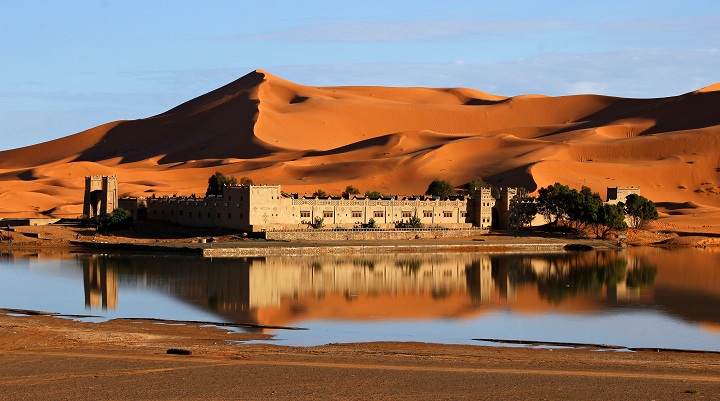
The Sahara Desert — the world’s largest hot desert — reaches its most accessible and spectacular expression in Morocco’s southeastern corner, where the legendary Erg Chebbi and Erg Chegaga dune seas rise from the flat hammada (stone desert) in breathtaking golden waves. Morocco’s Sahara is not one landscape but many. The hammada — vast plateaus of black volcanic rock stretching to the horizon — gives way to reg (gravel plains), oases of swaying date palms and irrigated gardens following underground rivers, dried riverbeds (oueds) that flash-flood after rare rains, and finally the magnificent ergs — seas of sand dunes shaped by wind into sinuous ridges, sharp crests, and bowl-shaped hollows that hold silence like water. Erg Chebbi, near Merzouga, is Morocco’s most famous dune sea — 22km long, 150m high, and accessible year-round. Erg Chegaga, near M’Hamid in the Draa Valley, is larger, wilder, and more remote — reached by 4WD across open desert and rewarding those who make the journey with complete solitude. The Sahara’s skies are extraordinary. With virtually zero light pollution across hundreds of kilometers, the night sky above the desert reveals the Milky Way as a river of light, shooting stars streak across the darkness every few minutes, and the silence is total — broken only by the whisper of wind across the dune crests. Travelers consistently describe a night in the Sahara as one of the most profound experiences of their lives. The human dimension of Morocco’s Sahara is equally rich. Berber and Tuareg nomads have crossed these sands for millennia, following ancient trade routes that connected sub-Saharan Africa with Mediterranean civilization. Their descendants still live in the desert, welcoming travelers with mint tea, camel treks, and music around the fire. Top experiences: Sunset camel trek on Erg Chebbi | Luxury Berber camp overnight | Sahara sunrise photography | Sandboarding | 4WD desert crossing to Erg Chegaga | Gnawa music performances | Fossil and meteorite hunting | Nomad family visits | Stargazing. Best time to visit: October to April. July–August temperatures exceed 45°C — extreme but survivable with preparation. Spring nights can be cold (5–10°C).